When an agent fails to meet their FINTRAC obligations, it’s the brokerage that gets the AMP, not the agent alone. Under Bill C-12’s new framework, that AMP can reach $20 million, plus a public compliance order with the brokerage’s name on it. Principal brokers carry this institutional risk, and the single biggest variable in how large that risk is comes down to how the brokerage supervises compliance across its agent team.
This post is how Canadian brokerages actually handle AML and compliance supervision at team scale. The centralized vs. distributed models, how to structure documentation, the independent contractor question, and the supervision trail FINTRAC expects to see. Written for principal brokers and compliance officers managing multi-agent operations.
The principal broker’s exposure
Start with the legal reality. FINTRAC examines reporting entities. In a mortgage brokerage, the reporting entity is the brokerage itself, not the individual agents. When FINTRAC issues an AMP, it’s to the brokerage.
This matters because many Canadian mortgage brokerages operate with agents as independent contractors rather than employees. The compliance burden doesn’t follow the contractor structure. Whatever the agent does (or fails to do) on a client file, the brokerage bears the regulatory consequence.
Principal broker exposure is three-layered:
Institutional. The AMP goes to the brokerage. Under Bill C-12, the new cumulative cap is the greater of $20 million or 3 percent of gross global revenue. For most Canadian mortgage brokerages this is a meaningful amount of money.
Reputational. Compliance orders get published on FINTRAC’s website with the brokerage’s name. For a business whose primary marketing channel is referral-based, reputational damage compounds the financial penalty.
Personal. The compliance officer role carries personal responsibility. While individual civil liability is rare in FINTRAC matters, the principal broker or named compliance officer can face direct personal consequences in some circumstances, particularly where willful blindness or negligent supervision is demonstrated.
$20M
maximum AMP exposure per very-serious FINTRAC violation under Bill C-12. The AMP lands at the brokerage regardless of whether an individual agent caused the failure. Supervision is how principal brokers manage that exposure.
All of this means principal broker attention on compliance supervision is not optional, and “I trusted my agents to handle it” is not a defensible position.
The two supervision models
Canadian brokerages generally structure compliance supervision in one of two ways.
The centralized model
The brokerage runs compliance as a centralized function. One or more compliance officers (usually including the principal broker) maintain the program centrally. Agent-level compliance activities (KYC, screening, EDD) are logged into a central system that the brokerage oversees. Review of individual files happens at the brokerage level on a sampling or full-file basis.
Pros:
- Consistent quality across agents. Standards applied uniformly.
- Centralized visibility at the principal broker level.
- Easier to demonstrate supervision at FINTRAC examination.
- Agent time on compliance work is minimized; agents focus on origination while compliance runs centrally.
Cons:
- Requires investment in centralized compliance infrastructure (software, personnel, workflow).
- Slower for agents who need a compliance response (e.g., to escalate a PEP case) if the central team is the bottleneck.
- Less agent ownership of compliance outcomes, which can create cultural friction.
The distributed model
Agents handle most compliance activity on their own files. The brokerage provides the framework (policies, training, tools) and the compliance officer provides oversight. Agents are individually responsible for KYC, third-party determination, PEP screening on their files. The brokerage audits periodically.
Pros:
- Scales without proportional central compliance headcount.
- Agents stay close to their clients and can handle nuanced identity or classification questions contextually.
- Faster agent-level decision making.
Cons:
- Consistency depends on agent-by-agent quality. Weaker agents create compliance gaps.
- Supervision documentation is harder to assemble at examination because records are distributed.
- Higher risk profile at the brokerage level because any agent’s failure becomes the brokerage’s problem.
Which works better
The centralized model is more defensible at examination and is where well-run Canadian brokerages have been moving. Post-Bill C-12, the effectiveness standard makes central visibility more valuable - FINTRAC wants to see that compliance is actually working across the brokerage, not just that individual agents were instructed to do their part.
That said, many Canadian brokerages operate in hybrid models. Agents do the initial work on their own files (KYC, document collection, client interaction), and centralized systems run behind this layer (screening, monitoring, record retention). The agent does the relationship work; the brokerage does the compliance work. This hybrid structure is what most modern broker compliance software - including BrokerPlus - is built around.
The independent contractor question
Most Canadian mortgage agents are independent contractors, not employees. This creates a legal wrinkle but not an escape clause.
FINTRAC’s position is clear: a brokerage that relies on agents to fulfill compliance obligations is still responsible for those obligations. The agent’s contractor status doesn’t transfer the compliance burden. The brokerage remains the reporting entity and bears regulatory responsibility for agent conduct.
What this means in practice:
The brokerage cannot outsource compliance accountability to agents. Contracts that attempt to assign regulatory liability to agents are not effective against FINTRAC. The brokerage answers for agent conduct regardless.
Training is a brokerage obligation. The brokerage must train agents on its specific compliance program. “We told our contractors to follow the rules” is not sufficient documentation.
Supervision is a brokerage obligation. Even independent contractors must be supervised in the compliance sense. This means reviewing their work, identifying gaps, and remediating them - not leaving them to operate autonomously.
Document everything. Contractor status doesn’t reduce the documentation burden; if anything, it increases it, because you need to demonstrate supervision is happening across people who aren’t on your payroll.
For principal brokers, the contractor question is really about structuring the compliance relationship - not escaping it. A well-structured contractor agreement explicitly incorporates the brokerage’s compliance policies, requires the agent’s compliance with training, and establishes the brokerage’s right to audit agent files.
The supervision documentation trail
What does supervision actually look like, documented, at examination?
Training delivery records. Each agent’s orientation and ongoing training, with attendance, content, and assessment where applicable. Dated and retained.
File review records. Evidence that agent files have been reviewed for compliance - either as sampling (a percentage of files reviewed periodically) or as full-file review (every file checked). The records show what was reviewed, what was found, and what remediation occurred.
Gap identification and remediation. Where a review found gaps (missing third-party determination, missing PEP screening, etc.), the response is documented. Agents who repeat the same gaps are handled with escalation - retraining, additional oversight, or separation.
Screening and monitoring records. Central screening runs produce records of every screen. These are the brokerage’s compliance records even when the underlying file sits with an individual agent.
Reporting structure. Who the compliance officer reports to (usually the principal broker), how often they meet, what’s discussed. Regular compliance meetings with documented agendas are stronger evidence than ad-hoc conversations.
Agent onboarding and offboarding. When agents join, they go through documented compliance orientation. When they leave, their active files are transitioned and their access to brokerage compliance systems is properly closed.
The purpose of this documentation isn’t to produce paper for its own sake. It’s to demonstrate at examination that compliance is actually happening across the team. Without documentation, the examiner has to take the brokerage’s word for it. With documentation, the examiner can verify.
The data and systems structure
Operationally, the supervision trail depends on having the right data in the right systems.
Centralized client database. Every client the brokerage works with, accessible at brokerage level. Not just individual agent databases that can’t be rolled up.
Centralized screening and monitoring. Sanctions, PEP, and adverse media screening runs on every client in the brokerage database, not per-agent. Ongoing monitoring runs continuously. Alerts route both to the agent and to the compliance officer.
File-level records. KYC documentation, third-party determination, evidence of identity verification - stored in a consistent format retrievable by file number, client name, or agent.
Audit logs. Who accessed what, when, and what changed. Both for compliance (who approved this EDD case?) and for security (who accessed this sensitive client data?).
Reporting dashboards. Principal broker visibility into compliance posture across agents: files awaiting review, EDD cases in progress, open flags, training status by agent.
This is what modern mortgage broker compliance software is designed to enable. BrokerPlus’s compliance dashboard is built around this exact workflow - principal broker sees the rollup, agents see their own files, records retain centrally in a format the FINTRAC examiner can work with.
The alternative - individual agent records in individual systems - breaks down at examination because the brokerage can’t produce centralized supervision evidence.
Common supervision failures
Several patterns that show up in compliance deficiencies and AMPs in adjacent sectors (real estate brokers being the closest analogue):
Training documented but not effectively delivered. Agents signed the form but didn’t actually absorb the material. Test by asking a random agent a basic compliance question - can they articulate their PEP screening responsibility? If not, the training is theoretical.
Sampling reviews without follow-through. The compliance officer reviews 10 percent of files, finds issues, but the issues aren’t remediated. The review record shows the deficiency without the response. This is worse than no review.
Inconsistent standards across agents. Some agents’ files are immaculate. Others are sparse. If the brokerage’s standard varies by agent, the standard isn’t effectively applied at the brokerage level.
Compliance officer without authority. The compliance officer identifies gaps but can’t require agents to fix them. If the principal broker isn’t visibly backing the compliance officer’s authority, the program doesn’t function.
No post-termination file review. When an agent leaves, their files are transitioned without a compliance review. Any gaps get inherited by whoever takes the files over, without documentation of when the gap emerged.
How to structure supervision in 2026
For a principal broker building or refreshing a supervision structure post-Bill C-12:
- Confirm the compliance officer has real authority. Not just title. Authority to require agent action on compliance matters, supported by the principal broker.
- Centralize the data. Every client in the brokerage flows through a centralized database. Every screening runs centrally. Every EDD approval routes through the compliance officer.
- Define the supervision cadence. Regular compliance reviews at defined intervals. Monthly or quarterly audits of random file samples. Annual review of training and overall program.
- Document everything. Training delivery, file reviews, gap remediation, agent-specific issues. Retained in a format retrievable at examination.
- Invest in software that supports the above. Manual supervision at agent-team scale doesn’t work. BrokerPlus handles the centralized screening, monitoring, and records for the compliance function specifically. CRMs handle the pipeline side. Together they produce the data FINTRAC will examine.
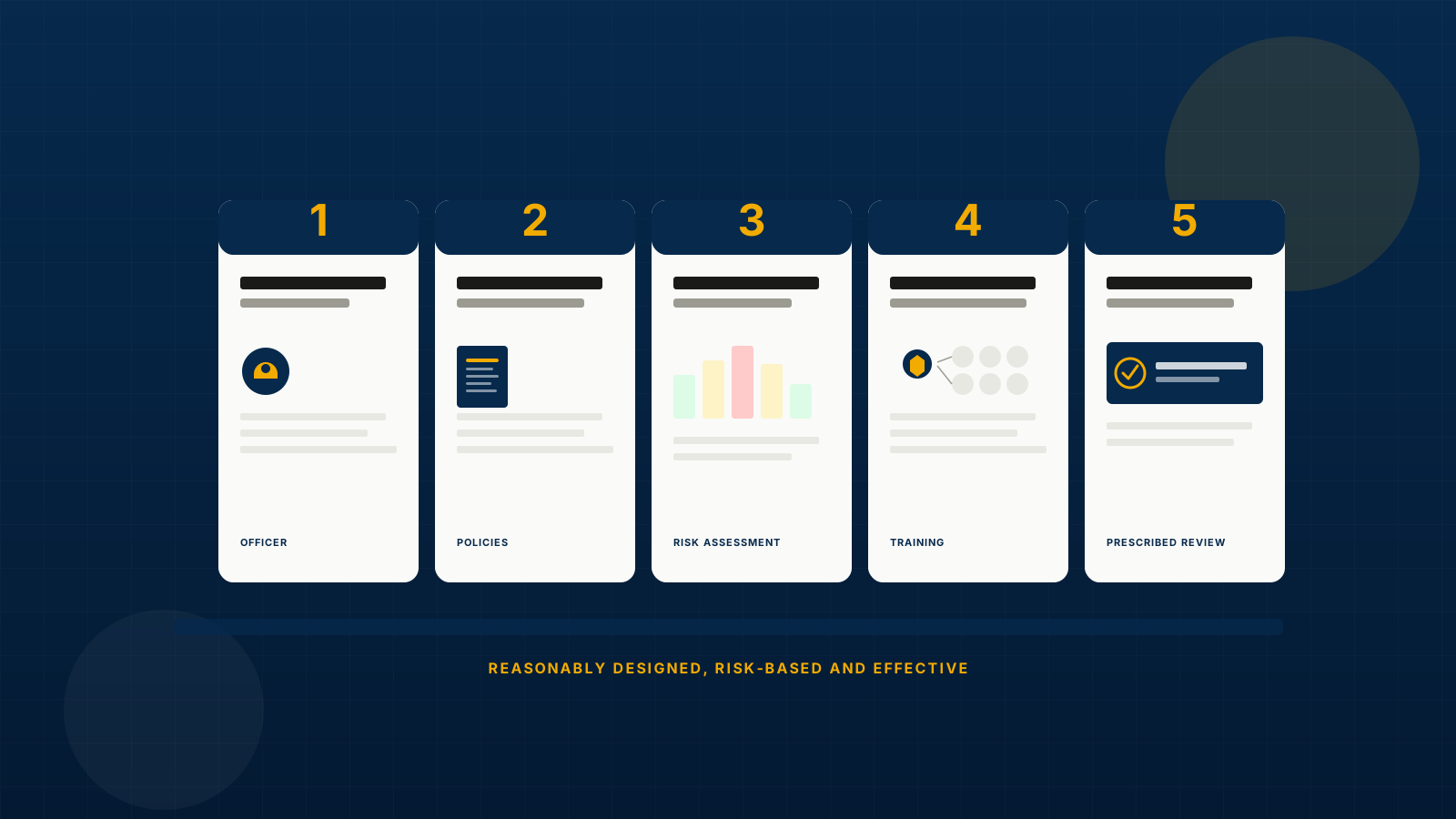
- Budget for the prescribed review. Every two years, minimum. This validates to FINTRAC that supervision is genuinely working, not just claimed.
Frequently asked questions
How does supervision work if agents use different origination tools?
Agents using Filogix, Velocity, Finmo, or other origination tools can still feed their client data into a centralized brokerage compliance system. The origination tool is where the deal lives; the compliance system is where screening, monitoring, and records live. BrokerPlus imports from all major Canadian origination platforms, which makes this workable. The alternative - each agent’s origination tool holding their compliance records separately - doesn’t roll up to brokerage level.
Can I use a brokerage compliance system if agents are independent contractors?
Yes, and you should. Contractor status doesn’t change the brokerage’s regulatory obligation. The contractor agreement should require agents to feed their client data into the brokerage compliance system and submit to compliance oversight.
What’s the minimum supervision cadence?
Training delivered at onboarding plus annual refresh. File review at least quarterly with random sampling (10-20 percent of each agent’s files). Monthly compliance officer meetings with principal broker. Prescribed review every two years. This is a reasonable floor; larger or higher-risk brokerages should operate more frequently.
What happens if an agent refuses to comply with the brokerage’s program?
Separation. A brokerage cannot carry an agent who refuses to comply, because the agent’s failure becomes the brokerage’s regulatory exposure. Document the compliance concerns, attempt remediation, and if the agent doesn’t comply, terminate the contractor relationship. Continuing to work with a non-compliant agent is willful blindness, which is a serious exposure under Bill C-12.
How do I handle compliance for new agents joining the brokerage?
Onboarding orientation covering the brokerage’s specific program, not just FINTRAC requirements generally. Shadowing or supervised file work for their first several transactions. Documented assessment that they understand and can apply the program. Ongoing oversight at a higher frequency for new agents than established ones, reducing as they demonstrate consistent compliance.
What about agents at satellite offices or different cities?
Geography doesn’t change the compliance framework. Remote agents submit to the same supervision structure as local ones. Cloud-based compliance software makes this workable; the compliance officer can review remote agents’ files the same way as in-office agents.
How does the brokerage prove supervision happened if it’s challenged?
Through documentation. Training records, file review logs, gap remediation records, compliance officer meeting minutes, principal broker oversight evidence. The examination question is “show me this happened,” and the brokerage needs to be able to produce evidence. Software that logs compliance activity automatically is dramatically easier to produce from than distributed manual records.